Proposal Videos, Graphics &
Win-Theme Visualizations
Turning a technical argument into something an evaluator can grade without reading every word.
Walgreens CTO
Concept, art direction,
graphic design
Design Director, frog,
a Capgemini Invent company
A proposal and an executive pitch have the same constraint: a technical argument, a reader with no time and no engineering background, and a decision made on whatever they can grasp quickly. This one was internal — the evaluator was a CEO.
CASE STUDY - WALGREENS PROJECT P
While at frog, a Capgemini Invent company, our team worked with Walgreens’ CTO on Project P, a new AI-assisted technology.
Project P was a complex data-and-recommendations system: patient records, pharmacy visits, consent preferences, and third-party clinical research feeding a personalized recommendation engine that learned continuously from its own output.
The CTO, the Capgemini engineers, and the business consultants all understood it — we worked with it every day. But we needed the CEO’s approval to explore the idea further, and if the exploration went well, we'd need a comprehensive case to sell it to Walgreens' non-technical decision makers.
Technical input
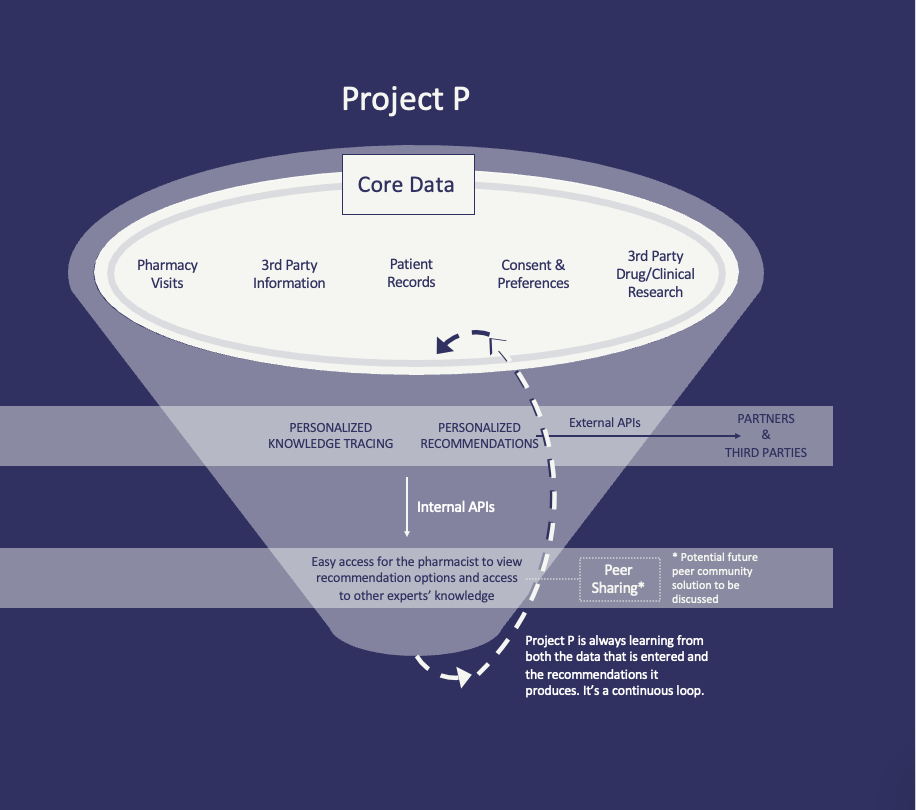
“The What” – Product explanation graphic (up close)
Translation / Work
FIRST: THE CEO GREEN LIGHT
CEOs have limited time, and they want the shape of a technical idea rather than its mechanics. So I made a short, high-level explainer video — enough to understand what Project P was and why it mattered, and nothing beyond that.
The CEO understood it immediately and greenlit further exploration.
“The What, Why, How” – Explainer video
THEN: THE FULL CASE
With the green light, the CTO and our team of engineers, strategists, and business consultants developed the why, what, when, and how of the project. My job was to make that presentable to people outside it.
I built the deck as a narrative arc, opening with the question an executive actually asks first: why do we need this technology, and why now?
From there, graphics carried the “What” and the “How” — the big idea, the requirements, and the workflows, in a form a non-technical decision maker could follow.
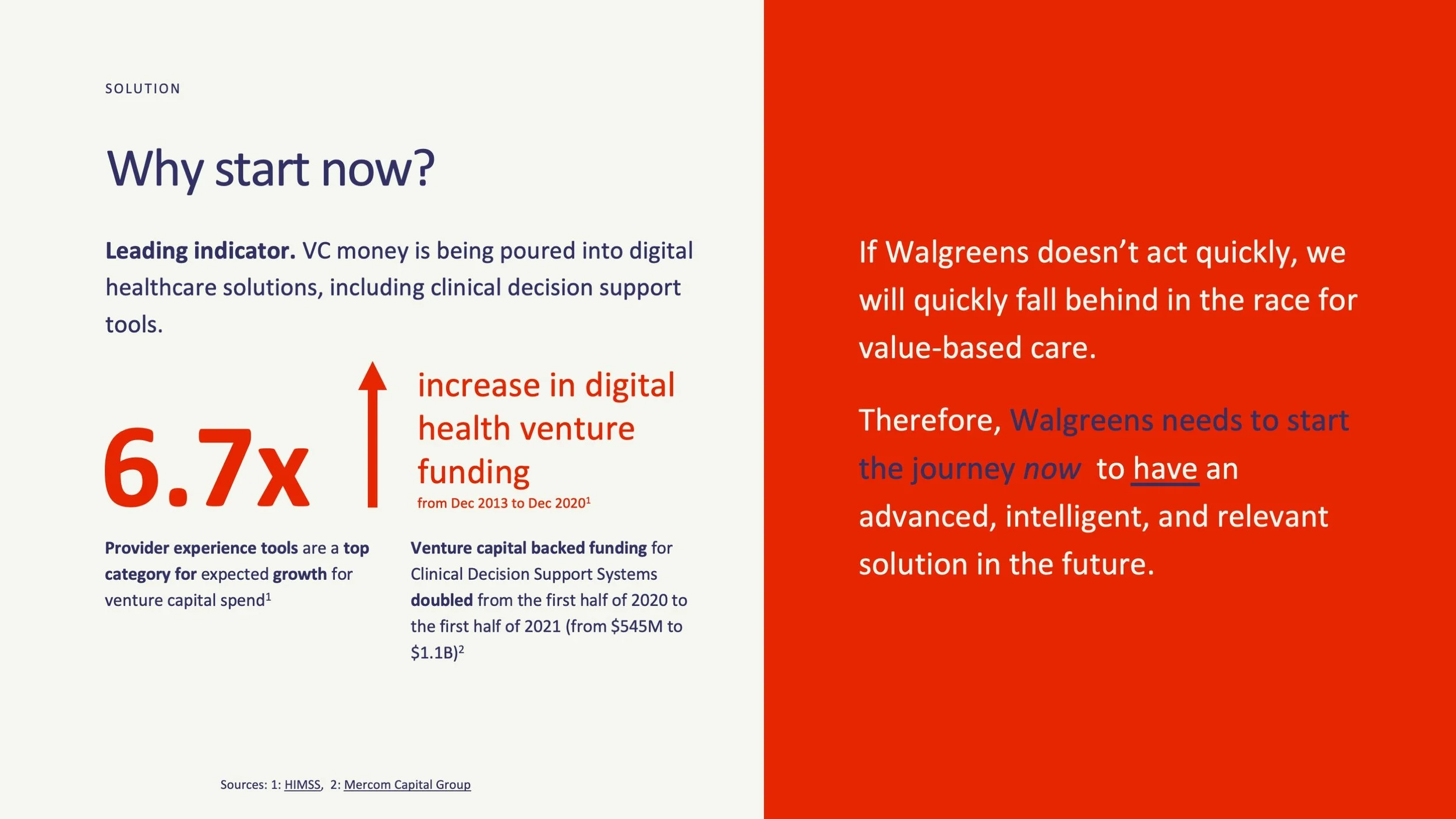
“The Why Now” graphic
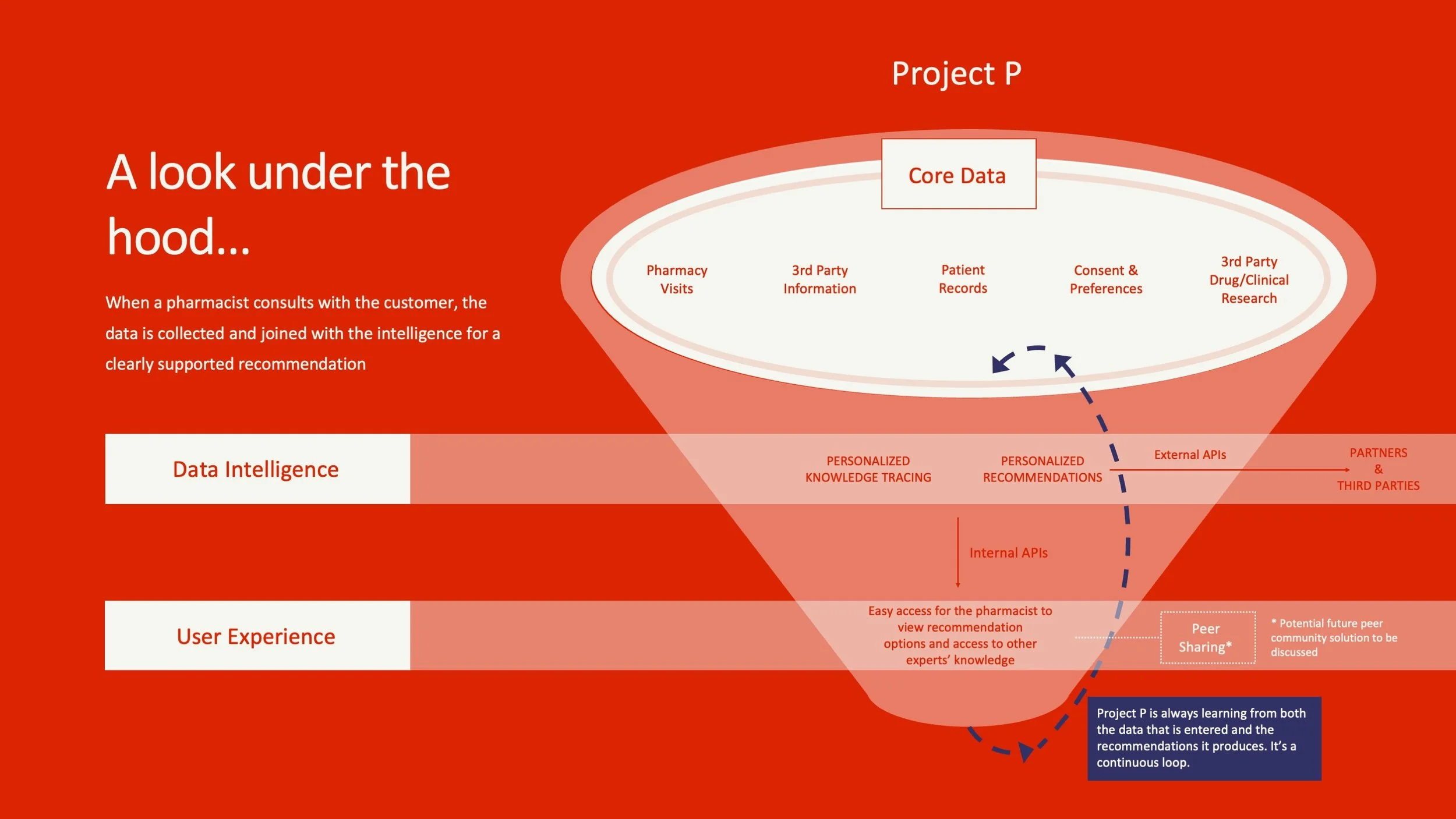
“The What” – Product explanation graphic
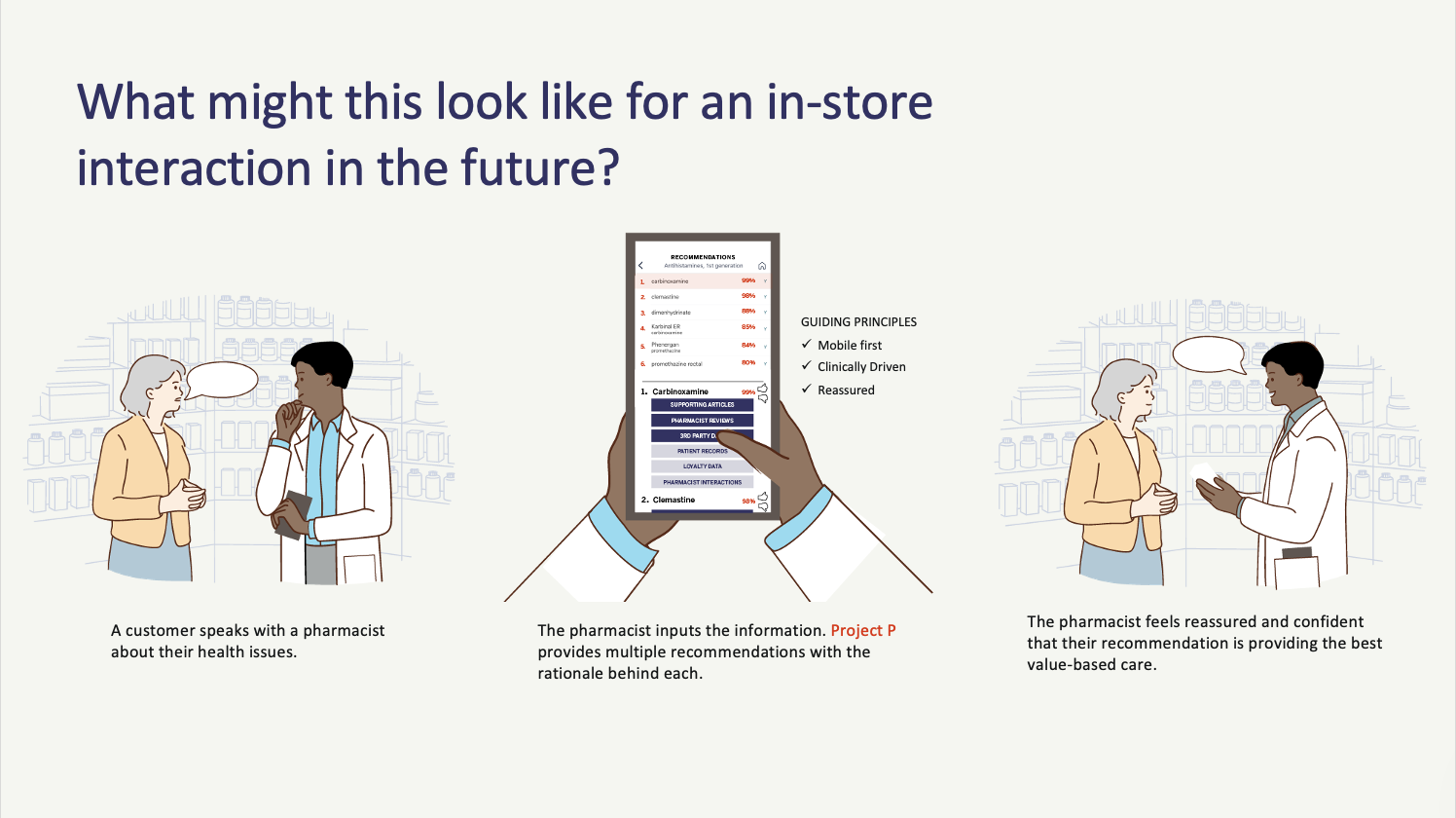
“The What” – Product in use narrative
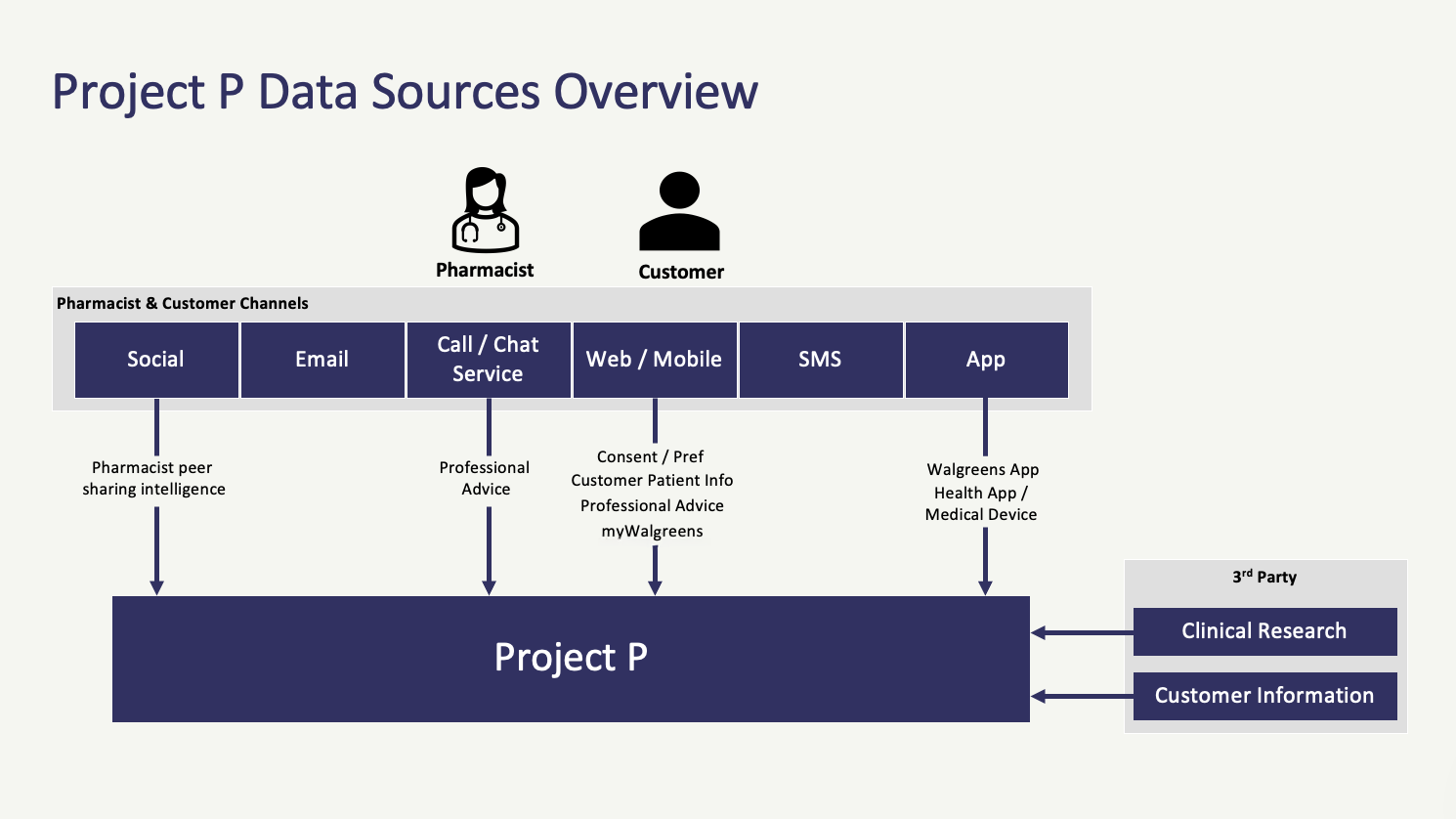
“The How” – Data sources
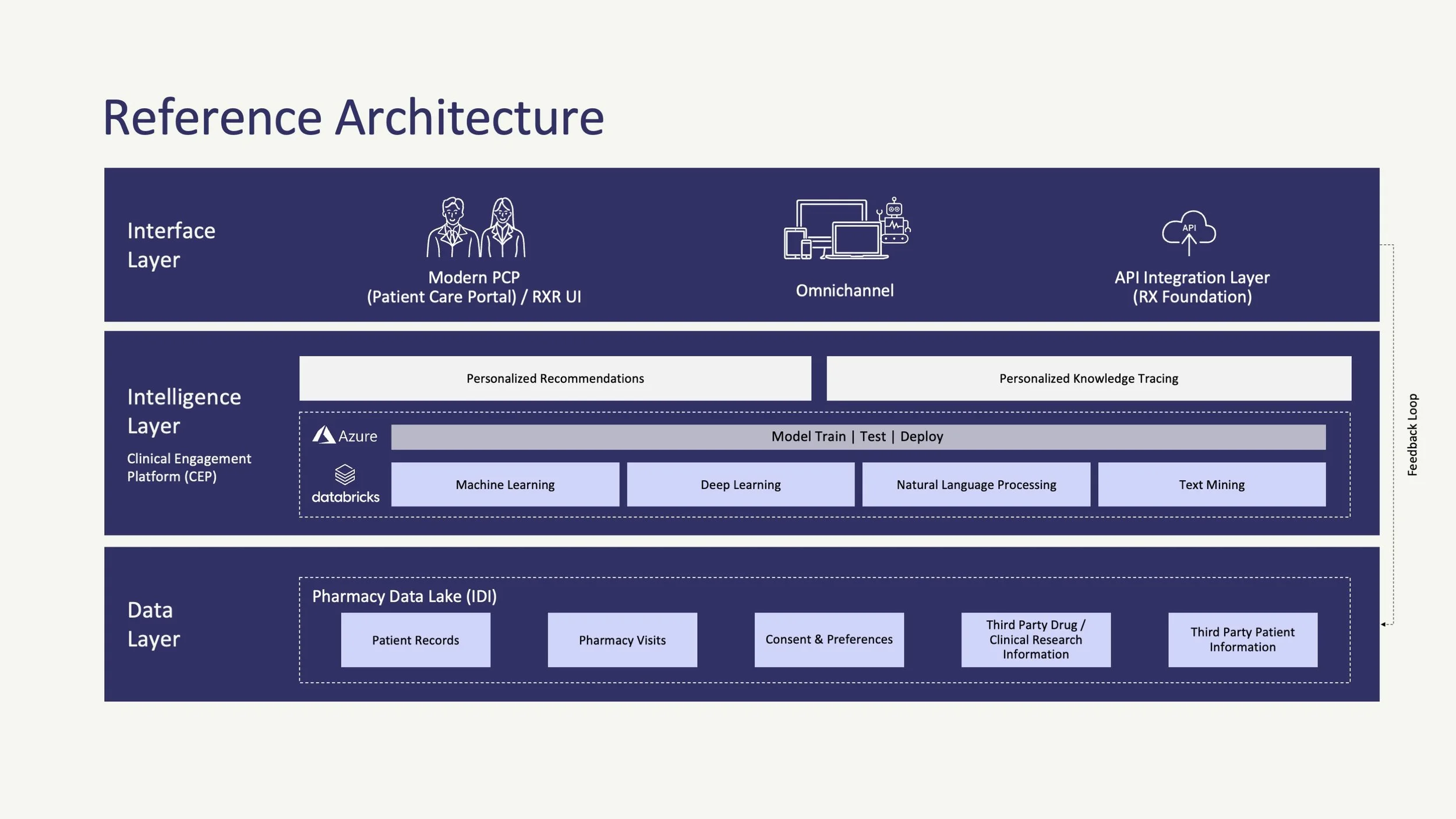
“The How” – Reference architecture
Outcome
The explainer video got Project P its initial green light, and the presentation carried the idea to Walgreens’ non-technical decision makers. The technology was still under consideration when our engagement ended.
Pitches won
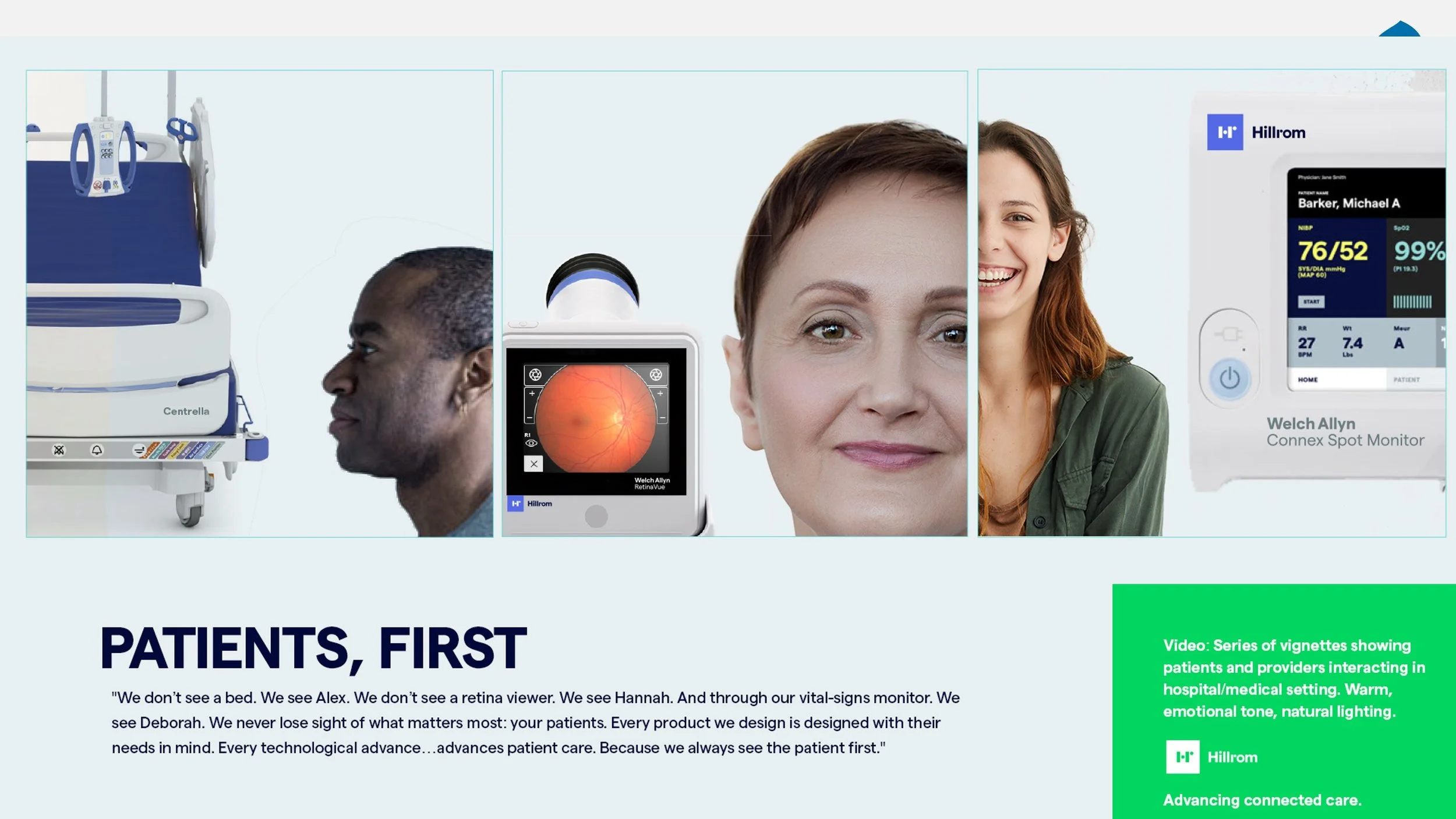
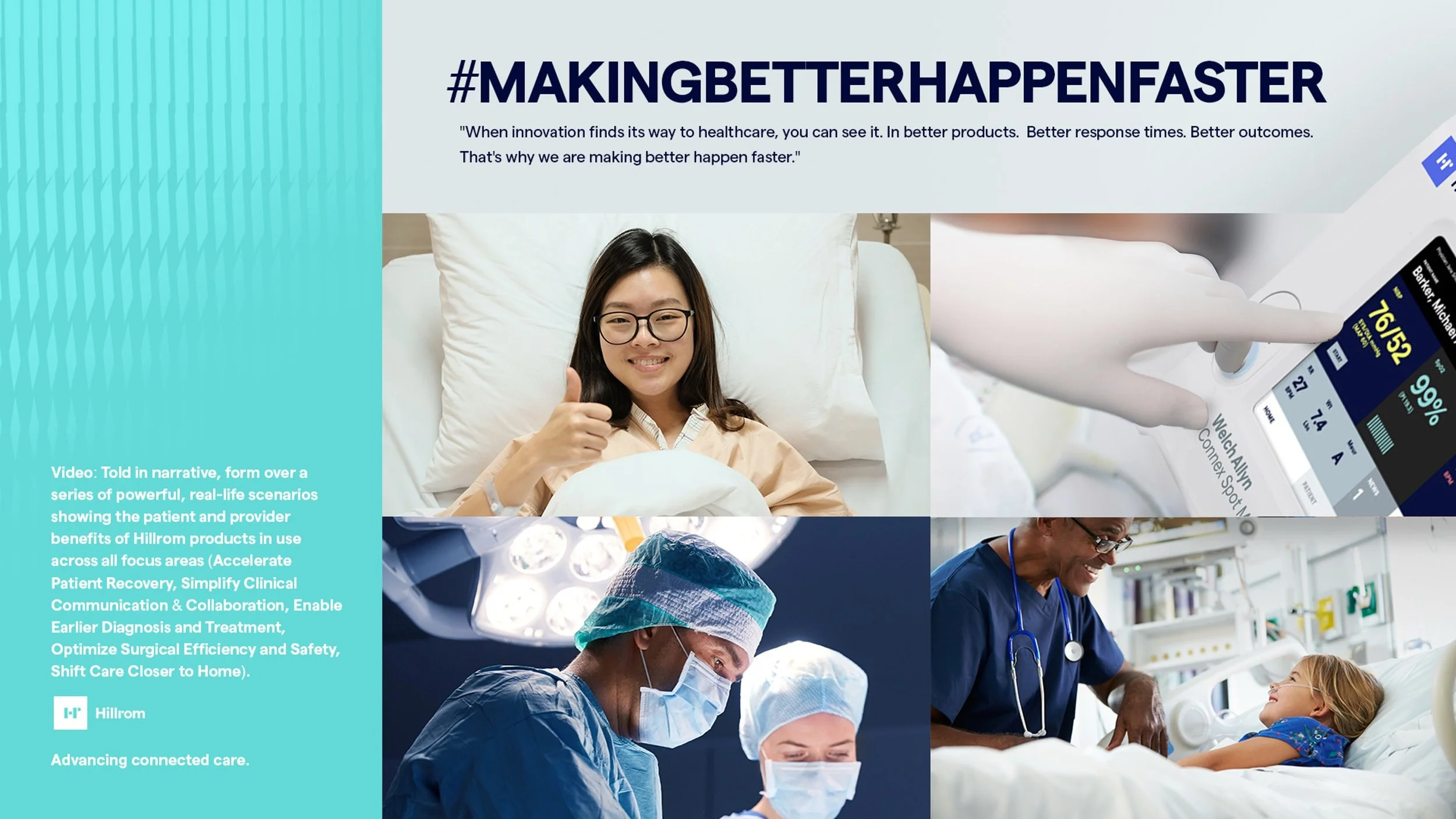
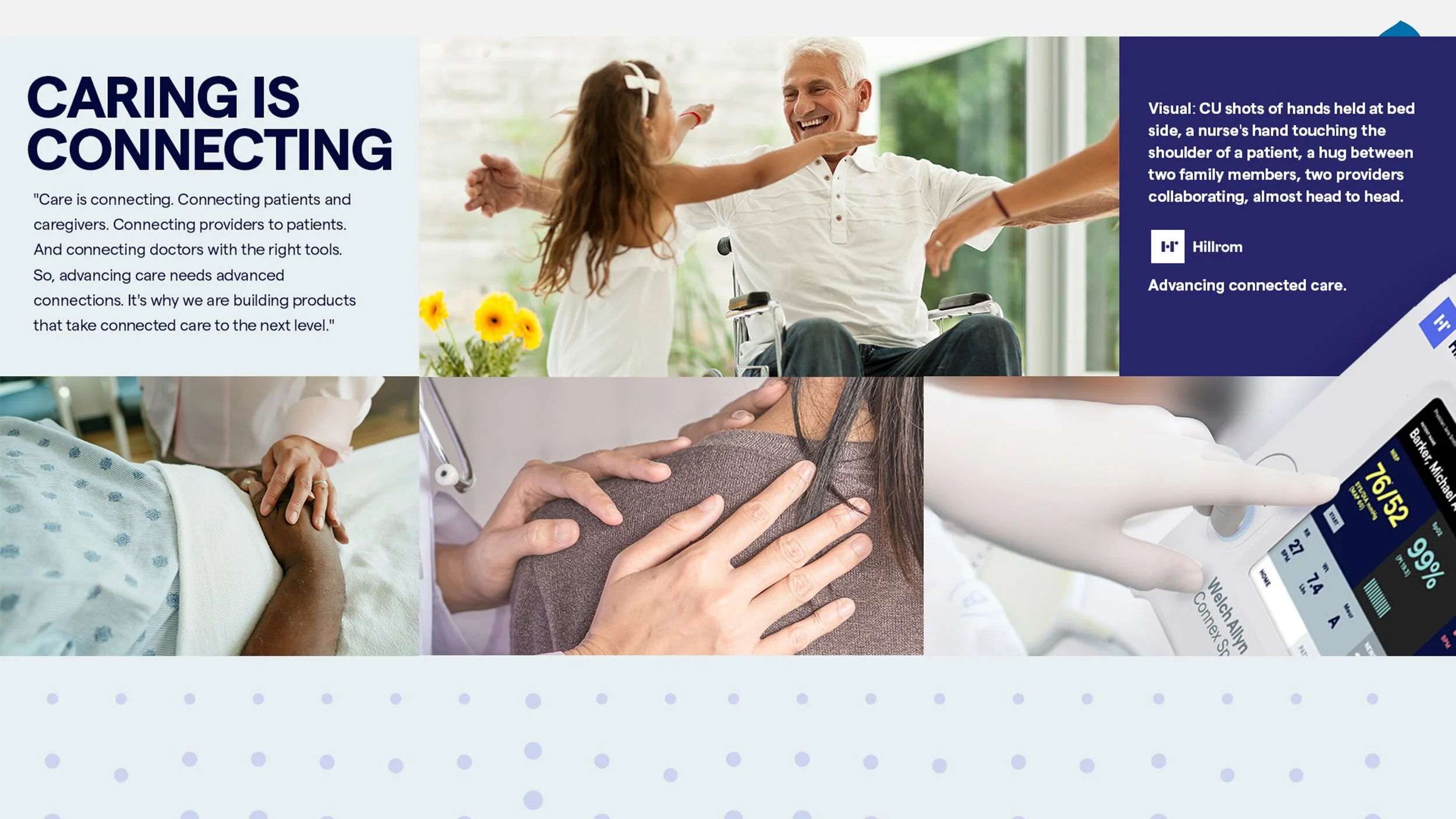
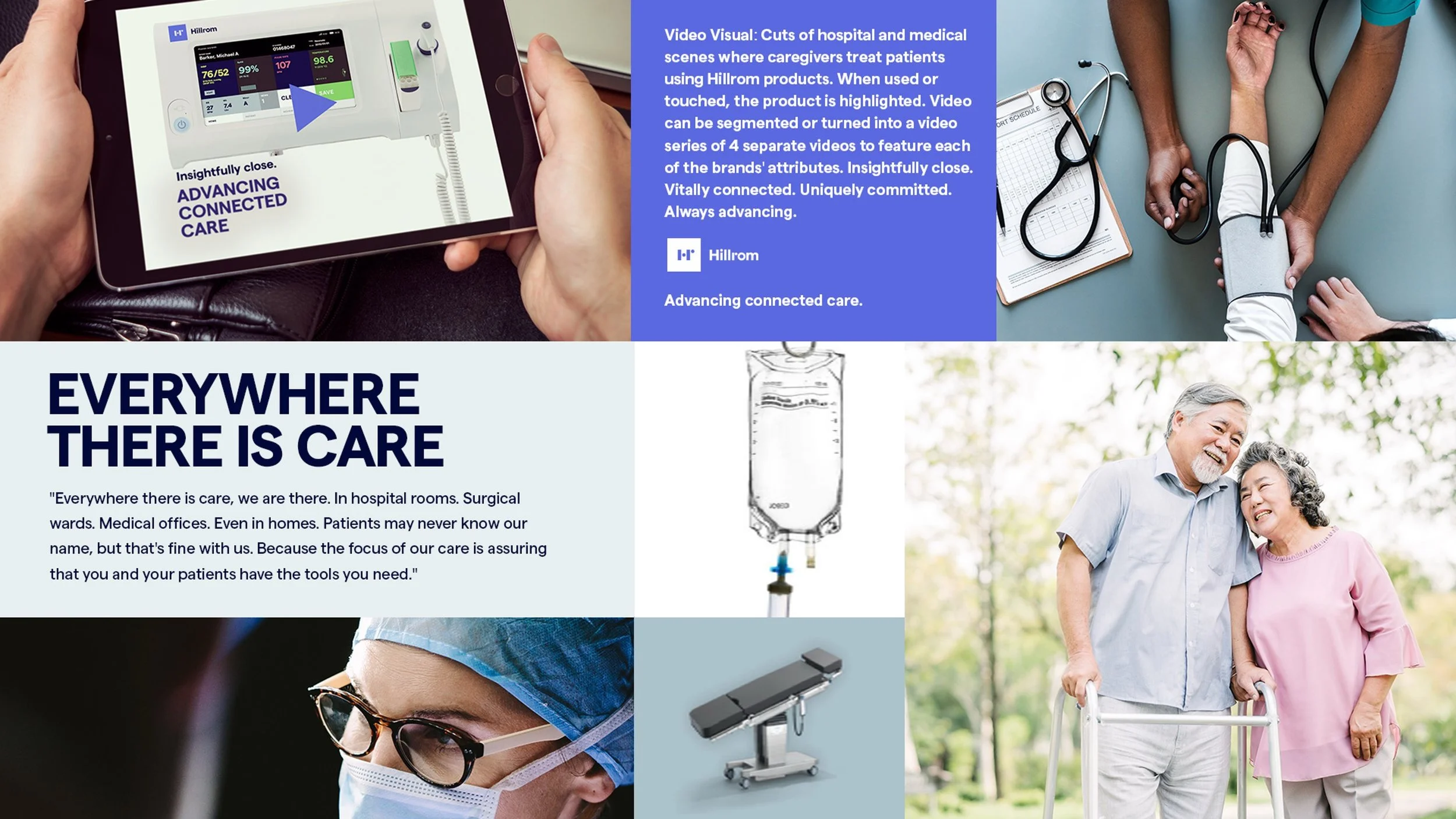
Hillrom. A bed-tech manufacturer acquiring its way into a full medical-device portfolio, and rebranding around it. frog was one of five finalists presenting in person. I created the winning campaign concept — Everywhere there is care, we are there — and presented it with the team. Won.
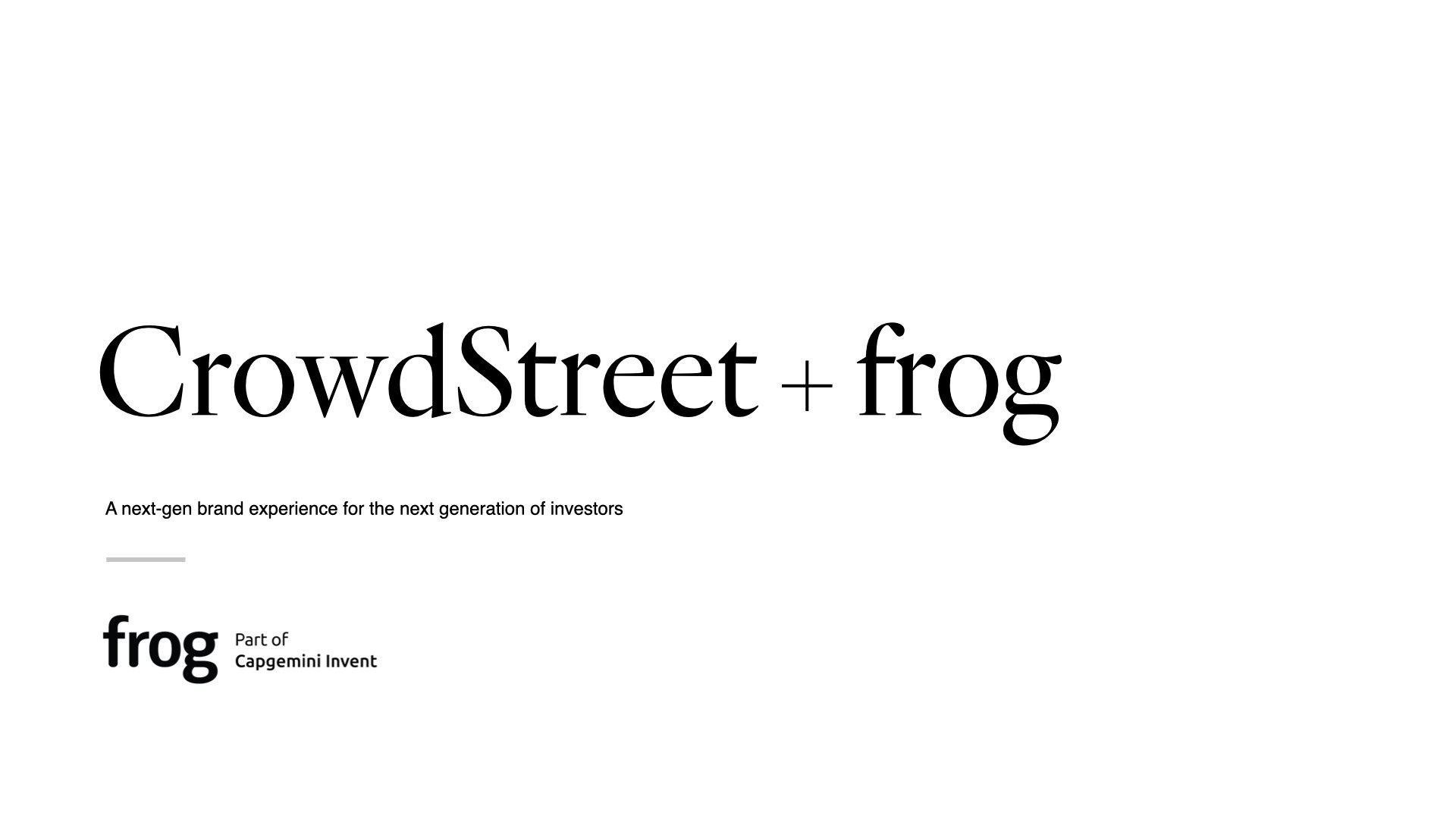
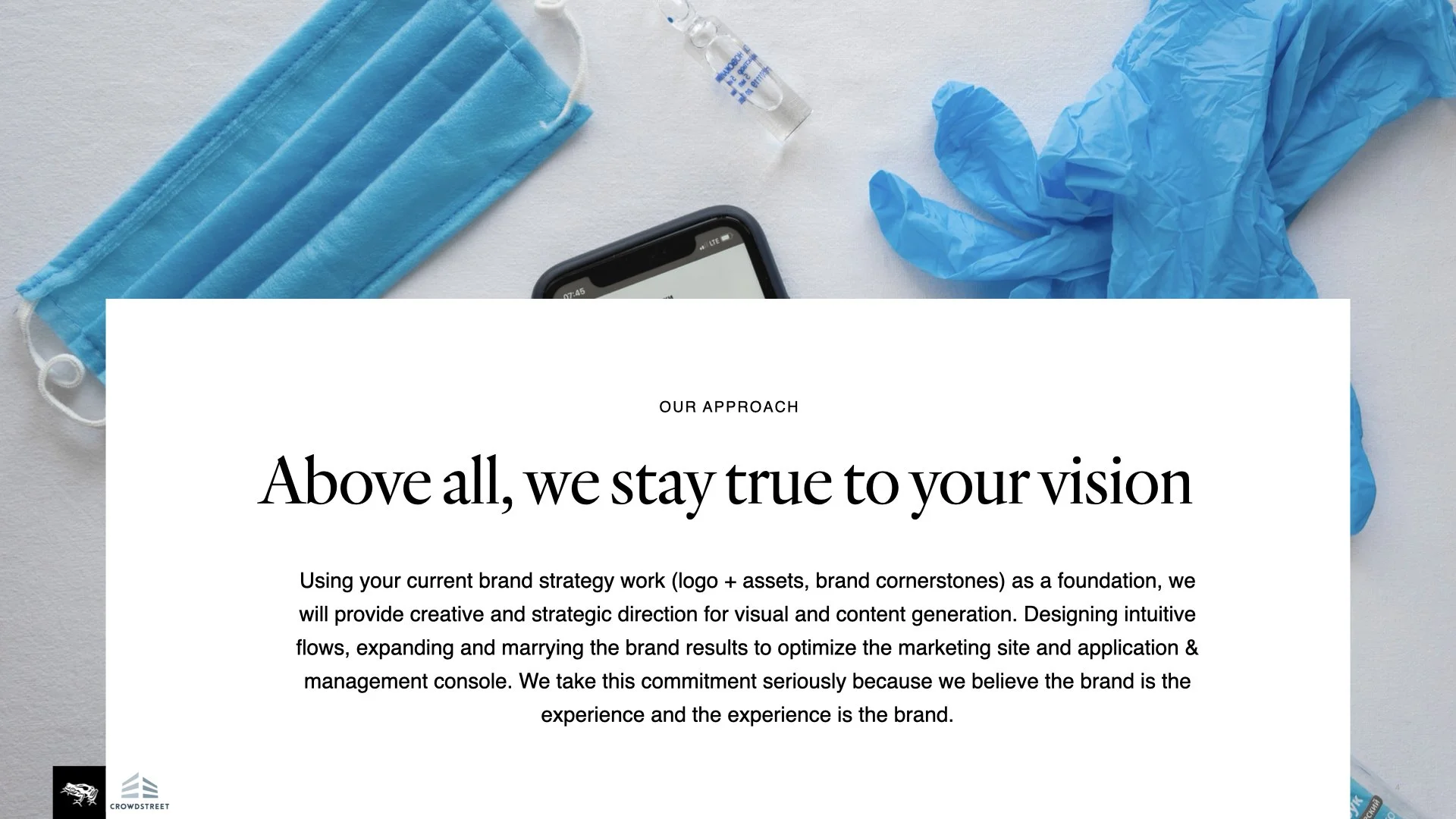
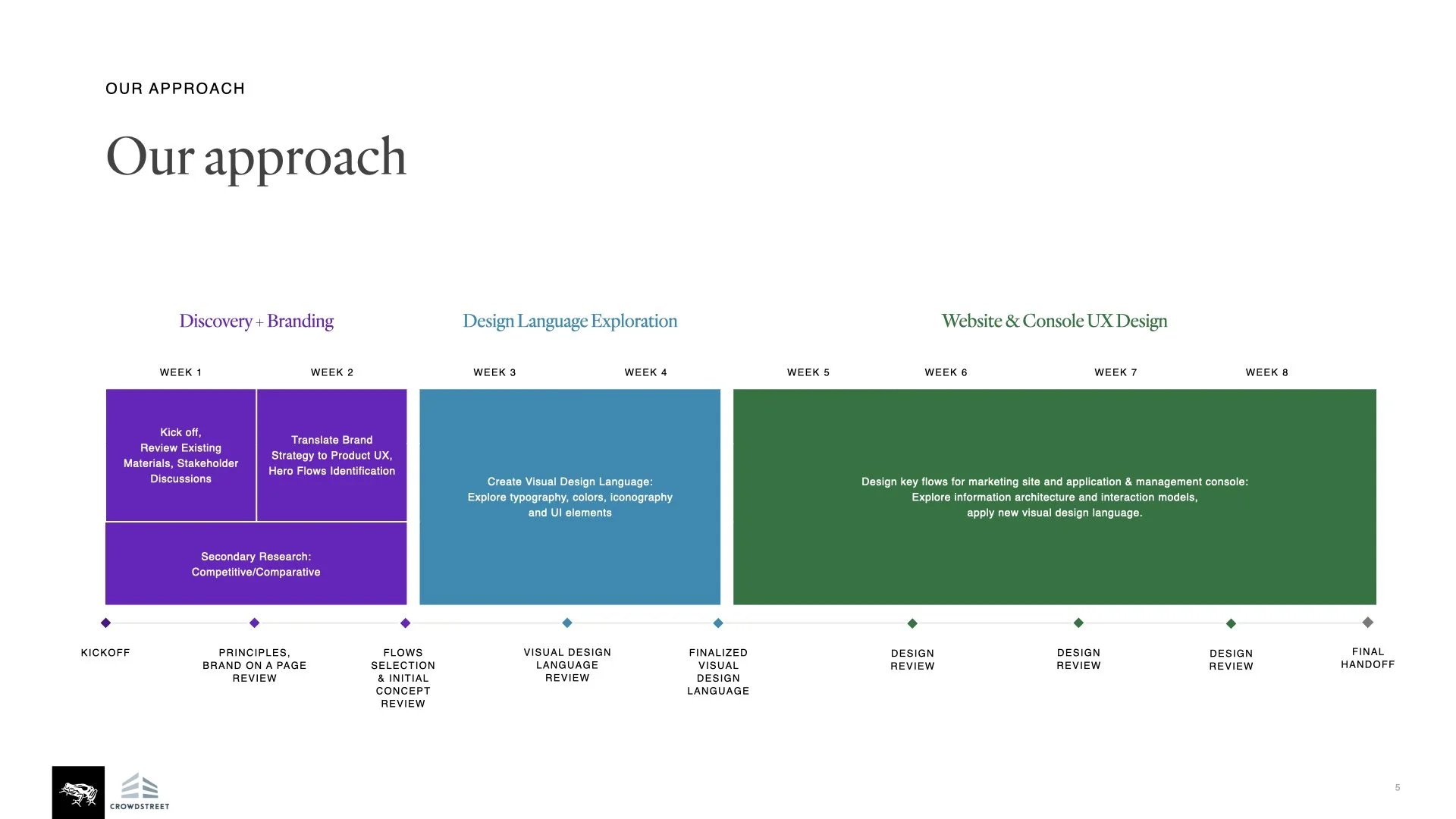
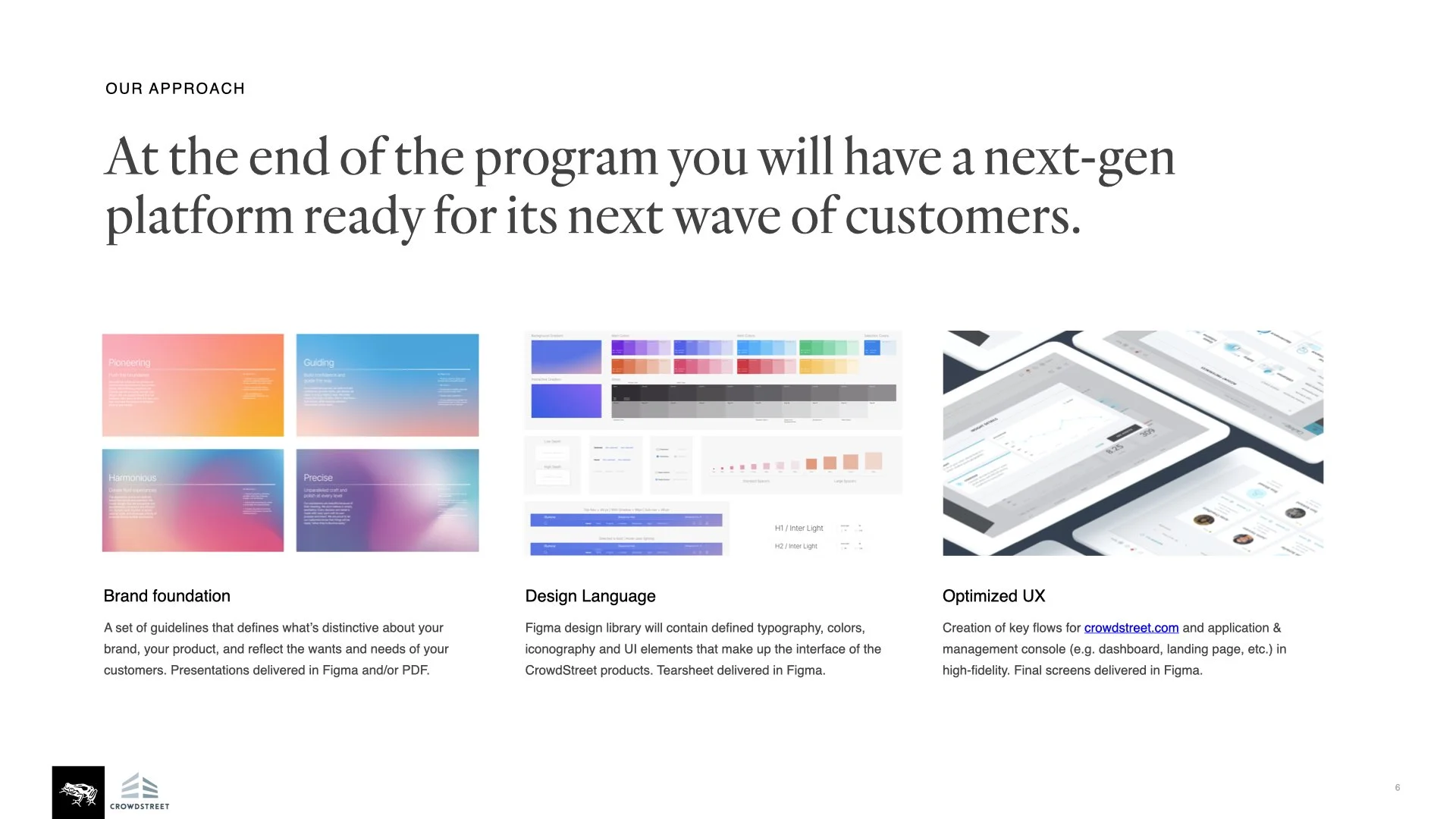
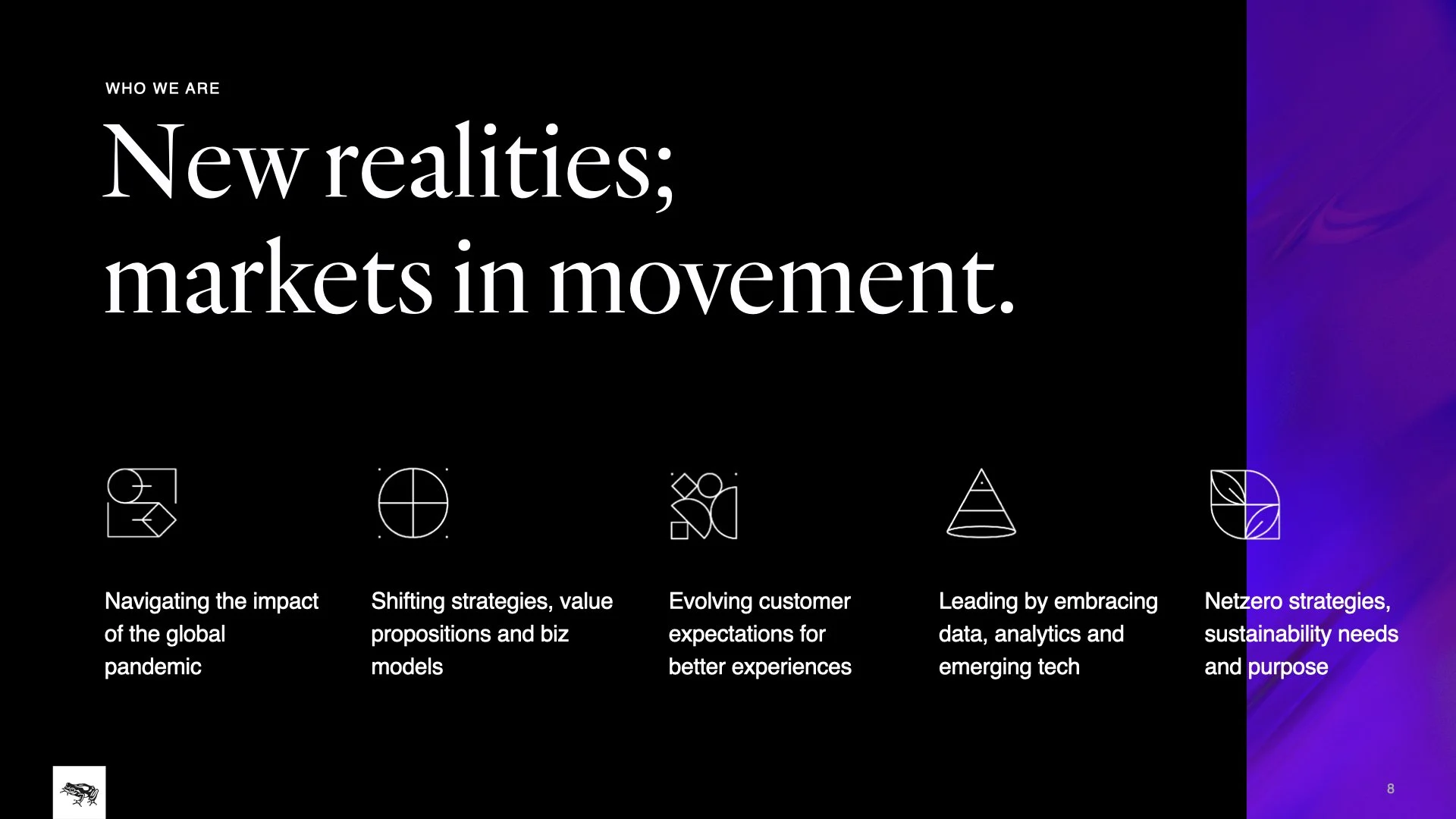
CrowdStreet. A next-gen brand experience for the next generation of investors. I built the pitch narrative, created the graphics, and selected the case studies. Won.
DHL Technology Event. Brought in by an event producer to concept and design a technology event on a one-week turnaround. My concept was selected as the favorite of 20 submitted. The build estimate came in above what DHL chose to spend, and the event didn't proceed.